PLATE IV
Base and the Triangle of Support
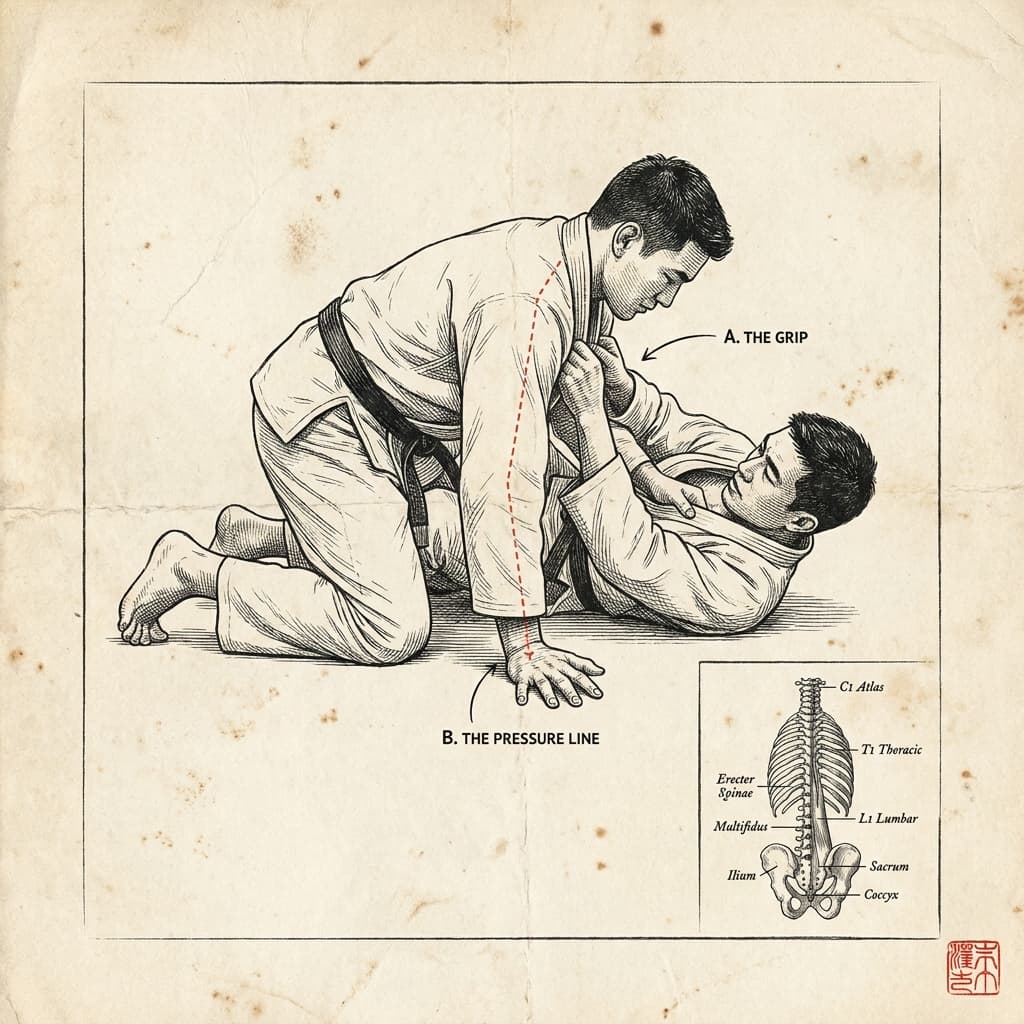
- 01
Kneel or stand over the controlled quarter and locate the three points that will bear your weight: both knees and one hand, or both feet and one palm. This is the triangle of support, and no technique built above it will outlast a triangle built poorly beneath it.
- 02
Set the two rear points of the triangle wide, roughly shoulder width apart, so the base cannot be rolled or walked out from beneath you by a single push.
- 03
Lower the hips. A base carried high is a base already lost; height converts easily into leverage for the man beneath you.
- 04Precision point
Place the third point of the triangle, the free hand or the free knee, at the outer limit of your reach rather than close beside the others. This distance is what keeps the triangle from collapsing into a single narrow line when tested.
- 05
Keep the spine long and neutral between the three points, neither arched nor rounded, so weight travels straight down through bone into floor rather than through strained muscle.
- 06
When the opponent bridges, turns, or shrimps, do not chase the disturbance with your hands. Widen or shift one leg of the triangle in the direction of the force, restoring the geometry rather than fighting the man.
- 07
Only once the triangle is restored should the free limb be spent on collar, wrist, or hip control. A grip taken before the base is secure is a debt paid twice.